Quick summary
- Engelberg is a working village in a high valley in the canton of Obwalden, built around a Benedictine monastery.
- In German, Engelberg means angel mountain, a name for the valley rather than a description of any single sight in it.
- Engelberg is the valley station where the cable cars leave for Titlis, not a stop with its own separate itinerary slot.
- The coach and cable car pass through Engelberg on the way up and the way down, without a block of free time in between.
A village before a mountain
Engelberg is a real village, not a viewing platform built for the cable car above it. It sits in a high valley in the canton of Obwalden, in central Switzerland, and people live and work there whether or not a coach from Zurich comes through that day. The valley takes its shape from the mountains around it, and the village takes its shape from the valley: narrow, following the flat ground between the slopes, with the Titlis massif closing off one end of it.
Most people who pass through Engelberg on a tour like this one never really arrive. The coach stops, the group transfers to the cable car, and the village becomes something seen through a window rather than a place visited. That is worth knowing before you go, because it changes what to expect from the day: this is where the mountain begins, not where the time is spent.
Where the valley sits
Engelberg lies south of Lucerne, in the canton of Obwalden, in the part of central Switzerland where the flat farmland gives way to the Alps. Mount Titlis rises in the Uri Alps directly above it, and the valley exists because the mountain does: without the massif closing it in at one end, there would be little reason for a village to sit exactly here. On this tour the coach reaches Engelberg only after already stopping in Lucerne, so the village sits at the far end of a route that starts in Zurich and works its way south into the mountains.
The name itself points at the same geography. Engelberg means angel mountain in German, and whatever the origin of that name, it describes a valley with a mountain at its head rather than a town built around any single attraction. The valley's own elevation is real and noticeable: the air is cooler and the light sharper here than it was on the drive down from Zurich.
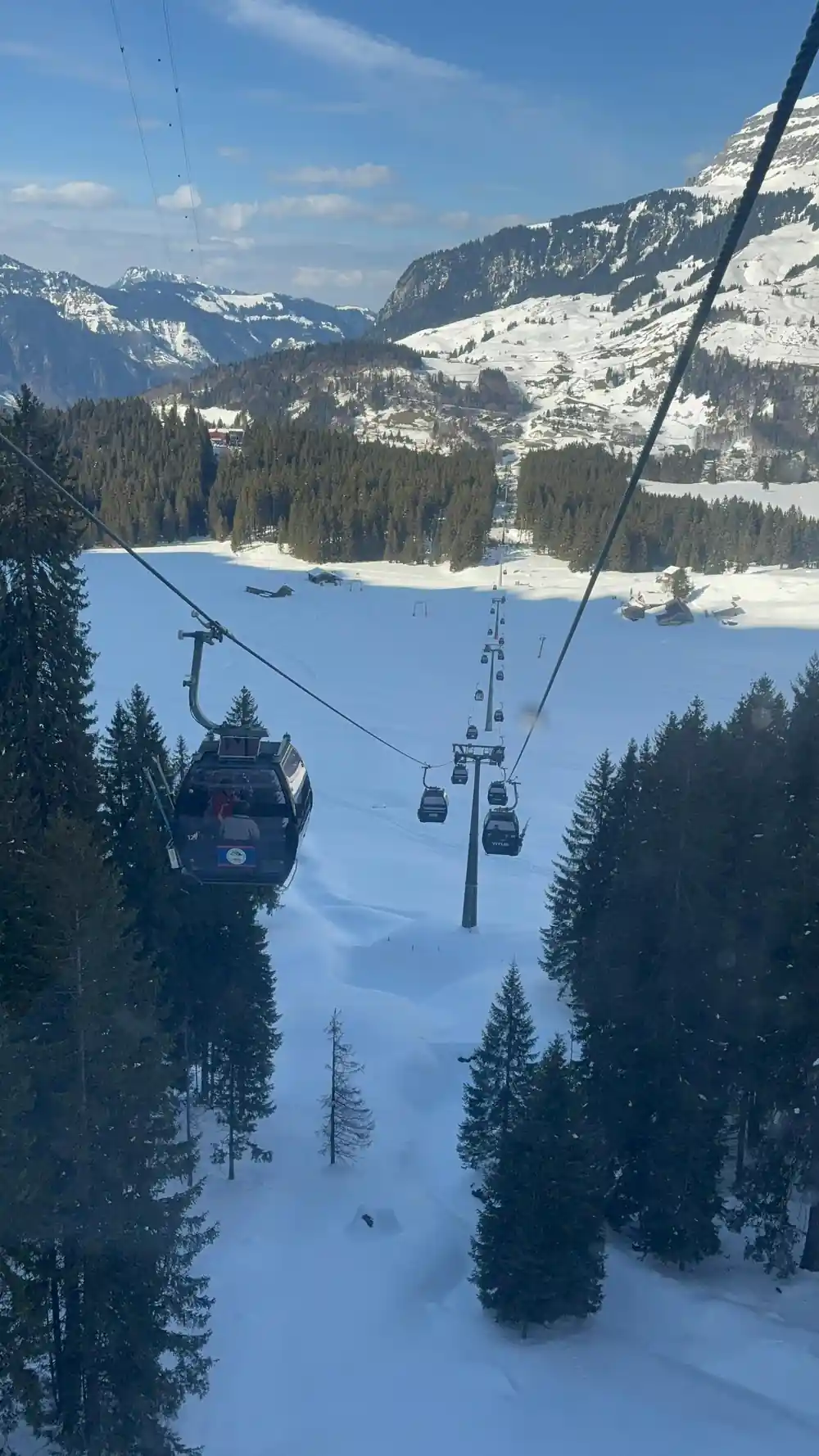
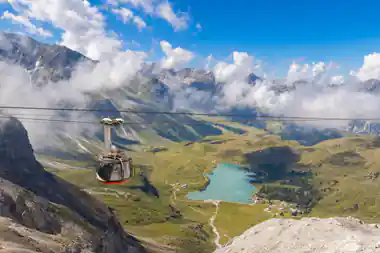
The valley floor at Engelberg, with the Titlis massif rising directly behind the cable car station.
The monastery at its centre
The village grew up around a Benedictine monastery, and that history still shapes the place more than the cable car does. A monastery is not a museum piece here: it is a working religious community, and its presence is part of why Engelberg feels like an actual town with its own life, rather than a gateway built for a mountain.
None of this makes Engelberg a monastery stop on this particular tour. The itinerary is built around the summit, and the monastery sits in the village that the coach and cable car pass through, rather than a place the day schedules time to see. Anyone who wants to look at it properly is looking at something this tour was not designed to show them.
The valley station for Titlis
Engelberg is where the aerial cable cars for Titlis begin, and on this tour it is the point where the coach empties out and the group boards for the ascent. Two cabins run this route: the revolving Rotair, which turns during the climb so the view changes without anyone moving, and the non-revolving Titlis Connect. Both leave from the same valley station in Engelberg, and neither exists without it.
That makes Engelberg the hinge of the day rather than a destination in its own right. Coming down is the same in reverse: the cable car returns to the valley station, the coach is waiting, and the group heads back through Lucerne. The village appears twice in the day, at the start and the end of the mountain, and briefly both times.
10 hours
The whole day tour runs about 10 hours, and Engelberg gets no separate block of that time, only the two cable car transfers either side of it.
Trubsee, and what changes above the valley
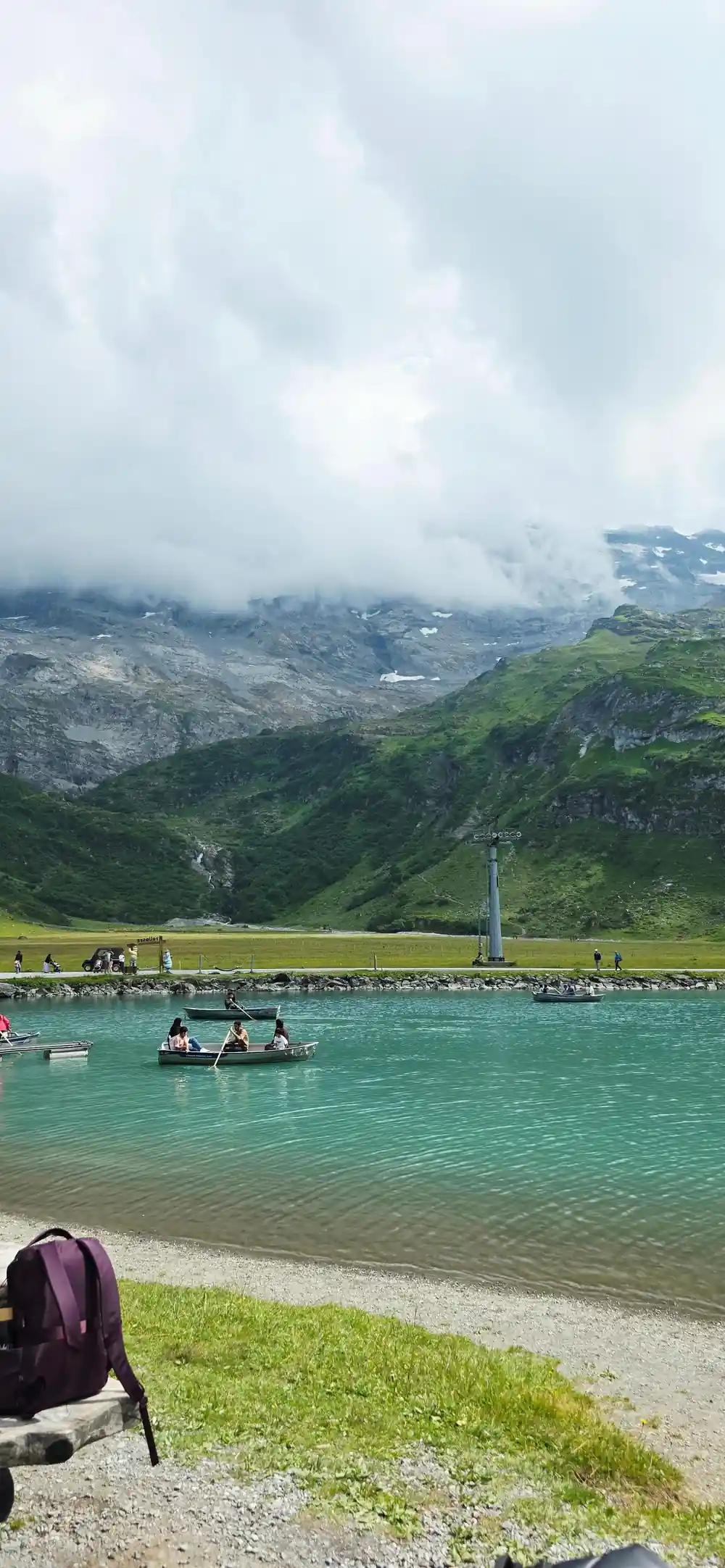
The first stretch of the ascent from Engelberg passes Trübsee, a lake at the middle station on the way to the summit. It sits well above the valley floor, on the mountain rather than in the village, and it is the point where the ride stops feeling like a trip between two towns and starts feeling like a climb into the Alps.
The operator states that, with a new tower and mountain station under construction from June 2026, only around an hour of time on the summit is possible, conditions allowing, before the group heads back down to Trübsee, where there are places to eat. That is a statement about ongoing building work on the mountain, not a permanent feature of it, so it is worth checking again close to the date you travel.
What you actually see of it
On a day trip built around Mount Titlis, Engelberg gets the amount of attention a hinge usually gets: enough to notice, not enough to explore. You see it from the coach window, at the cable car station, and again on the way back, and that is honestly most of what the schedule allows for a tour whose real destination is a long way higher up.
If a working alpine village under a glaciated massif sounds like somewhere worth more than a glimpse, that is a fair reaction, and it is also not something this itinerary is built to give. Seeing Engelberg properly, rather than passing through it twice, would mean coming back on its own terms, not as the valley station on someone else's day.
See dates for the cable car ride from Engelberg
from US$199Reserve now & pay later