Quick summary
- The summit is roughly 3,200 metres, and the cable car station and glacier attractions sit around 3,000 metres, higher than anywhere else on the trip.
- Stairs can feel harder up here, and a little breathlessness or a mild headache is common; it usually passes once you head back down.
- It is far colder at the top than in the valley on the same day, and snow covers the glacier all year, including in August.
- Sensible shoes with grip, a proper jacket, sunglasses and sunscreen matter here more than anywhere else on the day.
How High You Actually Get
The Titlis peak itself is roughly 3,200 metres above sea level, about 10,500 feet. The cable car station and the glacier attractions where you actually spend your time sit a little lower, around 3,000 metres. That is higher than anywhere else you are likely to stand on a trip built around Zurich and Lucerne, and higher than most visitors from lower ground are used to being.
You reach that height by cable car from Engelberg, the valley village below, so there is no climbing involved on your part. The lift does the work of getting you up there. Your legs will not notice the effort, but the rest of you still notices the change in air.
Two cable cars can cover the final stretch up: the Rotair, which revolves slowly as it climbs so the view turns without you moving, or the Titlis Connect, which does not revolve. Either way, the height gain happens while you sit still in a cabin, which is not always something your body catches up with as quickly as the ride does.
What the Thin Air Does to You
At 3,000 metres the air holds less oxygen than it does down in Zurich. Stairs and short walks that would pass without comment at sea level can feel noticeably harder here, and it is common to feel more out of breath than usual or to notice a mild headache.
This is a normal, usually mild reaction to altitude rather than a sign that something is wrong, and it tends to ease once you head back down towards Engelberg. Taking any steps or slopes at a slower pace than you would at home helps.
If you have a heart or lung condition, or you are simply not sure whether altitude agrees with you, talk to your own doctor before you book. That is a question for a doctor who knows your health, not for a page about a day trip.
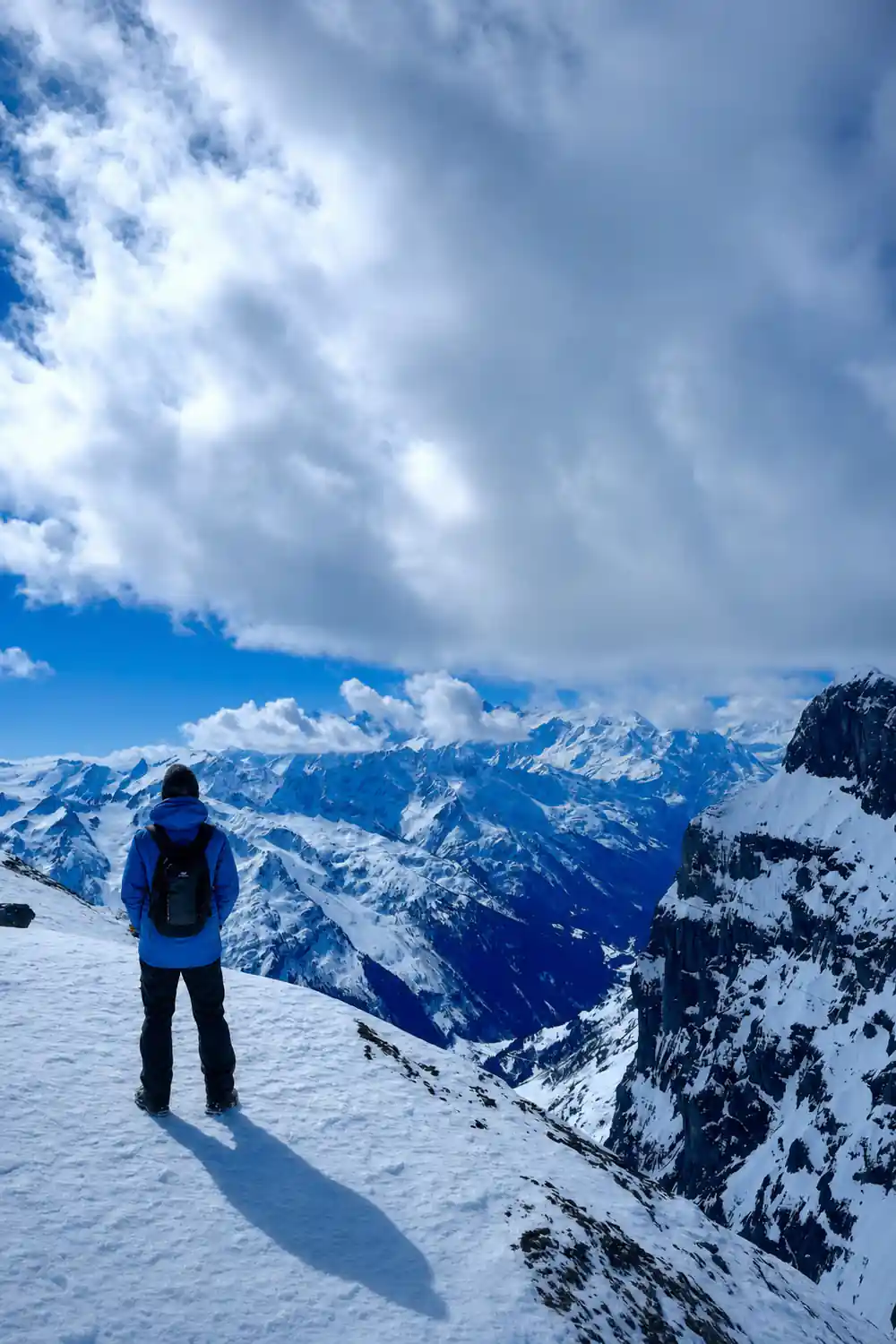
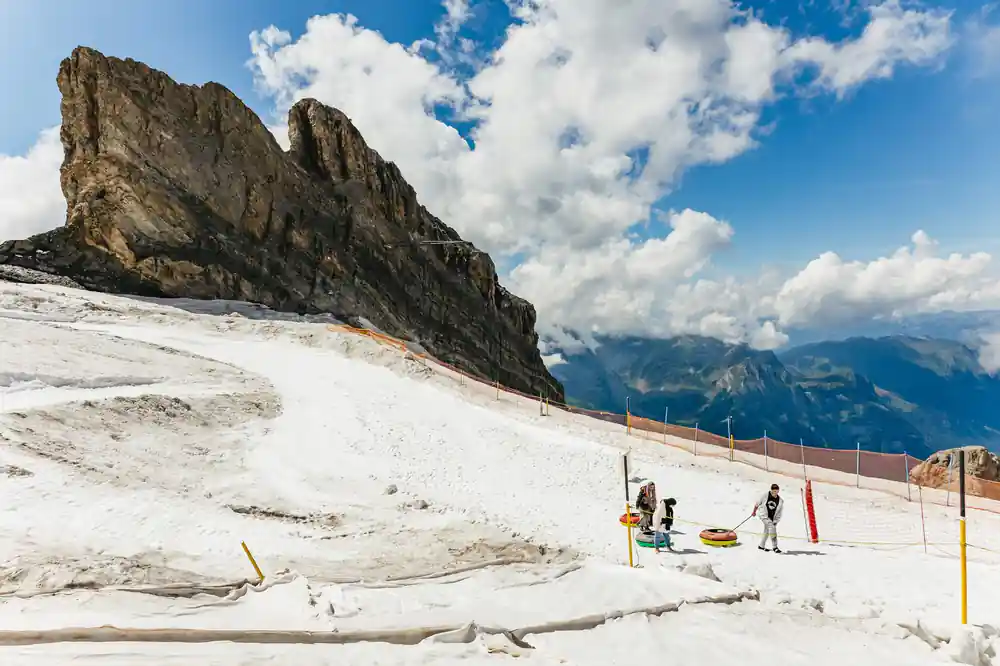
Snow and ice cover the glacier attractions at Titlis even in August.
Why the Summit Runs So Much Colder
The mountain is much colder than the valley on the same day. A mild morning in Zurich or Lucerne tells you very little about the temperature at 3,000 metres, where snow and ice sit on the glacier all year round, August included.
There is little at that height to block the wind, which sharpens the difference further. Dress for winter conditions at the summit whatever the season is doing in the valley below, and expect that gap to be considerable rather than mild.
The glacier keeps enough snow through the warmer months that snow tubing runs at the glacier park from May to August, moving to Trubsee from December to April depending on conditions. Snow holding on through a Swiss summer is a fair sign of how little the temperature at 3,000 metres has to do with the season in the valley.
Strong Sun on Bright Snow
Ultraviolet light is stronger at altitude, and snow reflects a large share of it straight back at you, so sunburn is easy at the top even on a cold or overcast day. It rarely feels like strong sun at the time, which is exactly why it catches people out.
Sunglasses cut the glare bouncing off the snow, which matters for comfort as much as for your eyes, and sunscreen on any exposed skin, lips included, is worth putting on before the cable car up rather than once you are already standing on the ice.
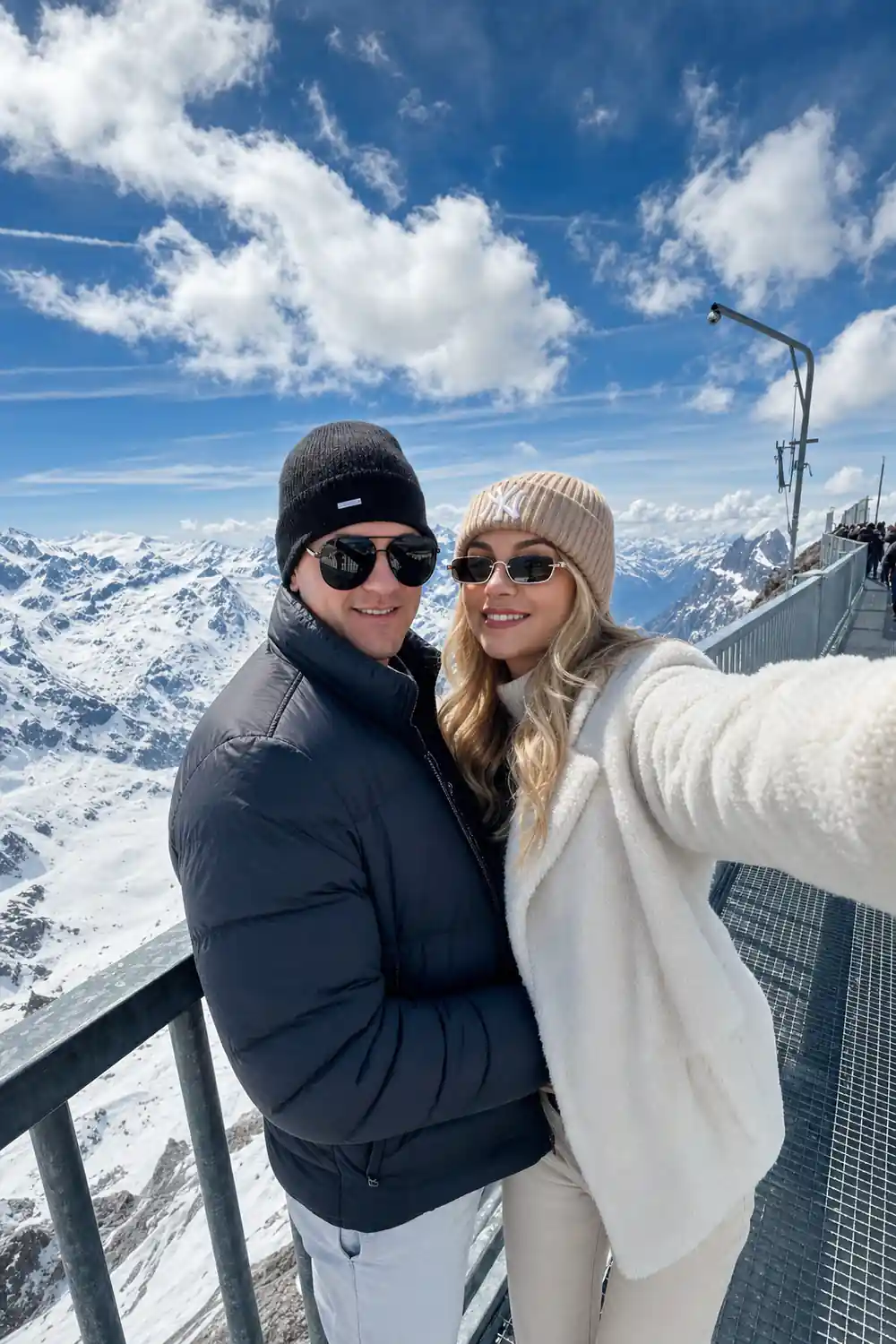
The glare does not let up because you are standing on the Cliff Walk or looking into the Glacier Cave. Ice and packed snow on every side reflect light back at you from more directions than a beach or a city street ever does, so treat the whole time at altitude, not just the open viewing platforms, as bright.
3,000 m
Roughly how high the glacier attractions sit, well above the lakes and villages in the valley below.
Dressing for a Day That Starts in a City
The day begins in Zurich in whatever you would normally wear to get around a city, and it ends with time on snow and ice at 3,000 metres. Smooth-soled city shoes are the wrong choice for the Cliff Walk, the Ice Flyer and the paths around the glacier attractions, all of which can be icy or snow-covered depending on conditions.
A pair of sensible, closed shoes or boots with some grip on the sole is the difference between walking around confidently and edging along carefully. A real jacket, rather than a light layer meant for a mild city morning, earns its place in your bag for exactly the same reason the cold is worth taking seriously.
Pack for both ends of the day rather than dressing for one of them. Carrying a warm layer through Lucerne and Zurich in a bag is easy; finding one on the mountain, once you need it, is not.
Getting Around at the Top
The tour is not suitable for wheelchair users. The Cliff Walk, the Glacier Cave and the Ice Flyer chairlift all run weather permitting, so what is actually open on the day depends on conditions at the summit rather than on the itinerary alone.
The operator currently limits time at the very summit to about an hour before the group heads down to the Trubsee middle station, which has restaurant facilities if you want to warm up before continuing with the rest of the day.
None of this makes for an uncomfortable day if you plan for it. It comes down to treating the summit as a different climate from the one you left in Zurich, dressing for that difference rather than for the coach ride, and expecting the trip down to Trubsee as an ordinary part of the visit rather than as time cut short.
Book a Day That Takes You From Zurich to 3,000 Metres
from US$199Reserve now & pay later